

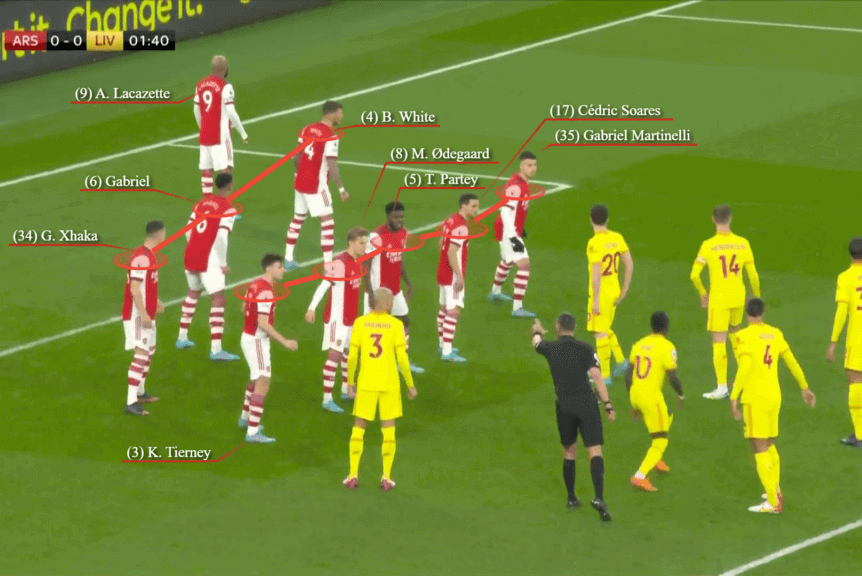
Conceding corners in La Liga is rarely a coincidence. Teams that allow high corner counts usually do so because of structural defensive choices, territorial imbalance, and repeated pressure along the flanks. Corner concessions reveal how a team defends space rather than how often a team is attacked. By examining these patterns, it becomes possible to understand why certain La Liga teams consistently give away corners regardless of opponent quality or match score.
Why corner concessions reflect defensive structure
Corners are conceded when defenders prioritize safety over progression. The cause is prolonged pressure in wide areas; the outcome is blocked crosses or deflected clearances; the impact is repeated defensive restarts. Teams that protect the box aggressively often accept corners as a low-risk trade-off compared to open-play shots.
This behavior becomes systematic when defensive lines drop early and allow opponents to recycle possession near the penalty area. Over time, this structural choice inflates corner counts even in matches where goals are not conceded.
Defensive shapes that invite wide pressure
Certain defensive shapes naturally push opponents toward the flanks. These shapes are effective at denying central penetration but increase exposure to wide deliveries.
Before listing them, context is essential. Corner-heavy defenses are not necessarily weak. They are often disciplined but territorially compressed. The explanation below matters because it separates intentional corner concessions from chaotic defending.
- Narrow low blocks protecting the central channel
- Fullbacks defending deep and close to center-backs
- Wingers tracking runners instead of pressing wide
- Midfield lines prioritizing box coverage over width
Interpreting this list shows that corners are often conceded by design. Teams using these structures reduce high-quality shots while accepting repeated set-piece situations as the lesser risk.
Territorial imbalance as the main driver
Corner volume correlates strongly with where the ball is played, not how dangerous attacks are. Teams that spend long stretches defending inside their own third concede more corners simply through repetition.
The cause is territorial loss; the outcome is sustained wide pressure; the impact is inflated corner totals. Even defensively competent teams accumulate corner concessions when they fail to push the ball upfield consistently.
Comparing corner-conceding team profiles
To understand which teams are most likely to concede corners, profiles must be compared by defensive behavior rather than league position. The table below outlines common profiles and their corner implications.
| Defensive Profile | Primary Objective | Typical Territory | Corner Concession Rate |
| Deep compact block | Protect central space | Defensive third | High |
| Reactive defending | Delay and clear | Defensive half | Medium |
| Aggressive pressing | Win ball early | Midfield | Low |
| Hybrid containment | Situational control | Variable | Medium |
This comparison highlights why some lower-table teams concede fewer corners than mid-table sides. Aggressive pressing reduces corner exposure by shortening defensive phases, while deep containment inflates them through repetition.
Match context that amplifies corner concessions
Corner concessions increase when teams protect narrow leads or accept long defensive phases against stronger opponents. In these contexts, clearing wide becomes the safest option.
This effect intensifies late in matches, where fatigue reduces precision in clearances. The cause is reduced exit quality; the outcome is repeated wide deflections; the impact is late-game corner accumulation that distorts match totals.
Using corner-concession data in analysis
From a data-driven betting perspective, teams that concede many corners offer insight beyond goals conceded. Corner data stabilizes faster than scoring metrics and reflects repeatable defensive behavior.
Under situational conditions where favorites dominate possession but struggle to break through centrally, observation leads to implication before reference. During this analytical phase, some analysts examine how various betting environments react to corner pressure. In that context, ยูฟ่าเบท may be reviewed as part of a broader market comparison, not to endorse decisions, but to observe whether teams with persistent corner-concession profiles are already priced accordingly or remain undervalued in corner-related markets. This alignment between defensive structure and pricing often reveals inefficiencies.
When corner concession patterns fail
Corner trends are not absolute. They weaken when teams change defensive height or alter fullback roles. Early goals can also disrupt patterns by forcing opponents to retreat rather than attack.
Conditional scenarios that reduce corner counts
Corner concessions decline when teams press higher, when opponents shift to central transitions, or when refereeing discourages physical box defending. In these scenarios, wide pressure decreases, breaking the repetition needed for sustained corner accumulation.
Summary
La Liga teams that concede corners frequently do so because of structural defensive choices rather than poor quality. Narrow blocks, territorial imbalance, and safety-first clearances inflate corner counts over time. While context can disrupt these patterns, corner concession remains one of the most reliable indicators of how teams defend space and manage pressure.
