


Finals week: the mere mention can send shivers down the spine of any US undergraduate. It’s a crucible of late nights, caffeine-fueled study sessions, and the pressure to perform. But what if there was a way to not just survive, but truly thrive? The secret lies in leveraging digital workflows – smart, efficient systems that streamline your efforts and maximize your study time. Forget frantic last-minute cramming; with these five digital strategies, you’ll be prepared, productive, and perhaps even… rested.
The modern academic landscape demands more than just rote memorization. It requires organization, efficient information processing, and the ability to articulate your understanding clearly and concisely. This is where digital tools become invaluable, transforming a chaotic period into a manageable, even strategic, endeavor. Whether you’re grappling with a complex research paper or a challenging set of problem questions, the right workflow can make all the difference.
1. The Dynamic Digital Planner: Your Central Command
Gone are the days of scribbled notes and forgotten deadlines. A dynamic digital planner is your mission control for finals week. Tools like Google Calendar, Notion, or Todoist allow you to meticulously map out your study schedule, assignment due dates, and even personal breaks.
Why it works:
- Centralized Overview: See all your commitments at a glance, preventing schedule conflicts and missed deadlines.
- Prioritization Power: Easily drag and drop tasks to adjust priorities as new information or challenges arise.
- Reminders & Notifications: Set alerts for study sessions, submission times, and even hydration breaks to keep you on track.
- Integration: Many digital planners integrate with other tools, like email and document storage, creating a seamless ecosystem.
Implementation Tip: Break down large assignments into smaller, manageable chunks. Instead of “Write 10-page research paper,” schedule “Outline research paper,” “Draft introduction,” and “Gather sources for body paragraph 1.” For students who often find themselves needing an extra hand with structuring their thoughts or overcoming writer’s block, exploring resources like those offered on essay writing services can provide valuable guidance and even direct assistance in outlining and drafting, integrating perfectly with your digital planning.
2. Research Revolution: Smart Annotation & Citation Tools
Research is the bedrock of many final assignments, and navigating academic databases can be a time sink. Modern annotation and citation tools revolutionize this process. Software like Zotero, Mendeley, or even browser extensions like Hypothesis allow you to collect, organize, and cite your sources with unprecedented ease.
Why it works:
- Effortless Citation: Automatically generate citations in various academic styles (APA, MLA, Chicago) with just a few clicks, saving hours and preventing pesky formatting errors.
- Integrated Annotation: Highlight key passages, add notes directly to PDFs, and even tag important concepts for quick retrieval.
- Centralized Library: Keep all your research materials in one organized digital library, accessible from anywhere.
- Collaboration: Some tools allow for shared libraries, making group projects significantly smoother.
Data Point: A study by the University of Michigan found that students who effectively utilized digital citation management tools reported a 20% increase in time efficiency during research-intensive tasks.
3. Collaborative Cloud Canvas: Group Project Powerhouse
Group projects can be particularly challenging during finals, with conflicting schedules and varying work styles. Cloud-based collaborative platforms are your secret weapon. Google Docs, Microsoft 365, and Slack allow real-time co-editing, seamless communication, and centralized file sharing.
Why it works:
- Real-time Collaboration: Multiple students can work on the same document simultaneously, seeing edits instantly.
- Version Control: Track changes and revert to previous versions if needed, preventing accidental deletions or overwrites.
- Centralized Communication: Keep all project-related discussions, files, and updates in one place, reducing email clutter.
- Accessibility: Access project materials from any device, anywhere, ensuring flexibility for all team members.
Implementation Tip: Establish clear roles and responsibilities early on, and use the platform’s commenting features to provide specific feedback and track progress.
4. Focused Study Environment: The Digital Detox Hub
Distractions are the enemy of productivity, especially during finals. Creating a focused digital study environment is crucial. This involves using apps that block distracting websites and notifications, and tools that encourage deep work.
Why it works:
- Website Blockers: Apps like Freedom or Cold Turkey temporarily block access to social media and other distracting sites.
- Pomodoro Timers: Tools like Forest or Tomato-Timer help you implement the Pomodoro Technique (25 minutes of focused work, 5-minute break), boosting concentration.
- Noise-Canceling Apps: White noise generators or focus-music apps can create an immersive study bubble, even in a busy environment.
- Digital Notebooks: OneNote or Evernote allow you to consolidate lecture notes, readings, and personal reflections into searchable, organized digital notebooks. This is especially helpful for revisiting complex concepts. For students looking to improve their essay structure and make their arguments more compelling, understanding different essay hook examples can be a game-changer. Integrating such techniques into your digital note-taking can help you recall and apply them more effectively.
Data Point: Research published in the Journal of Experimental Psychology: Applied suggests that even brief interruptions (like a notification) can significantly increase the time it takes to complete a task.
5. Proactive Self-Care & Stress Management: Digital Wellness
Finals week isn’t just about academics; it’s also a significant mental and physical challenge. Integrating digital tools for self-care can be a game-changer for your overall well-being.
Why it works:
- Meditation & Mindfulness Apps: Headspace or Calm offer guided meditations to reduce stress and improve focus.
- Sleep Trackers: Apps integrated with wearables can help you monitor your sleep patterns and encourage healthier sleep habits.
- Fitness & Movement Reminders: Simple apps can prompt you to take short stretching breaks or go for a quick walk, preventing burnout.
- Hydration Trackers: Reminders to drink water might seem basic, but staying hydrated is crucial for cognitive function.
Implementation Tip: Schedule short breaks for these wellness activities in your digital planner. Treat them as non-negotiable appointments for your well-being.-
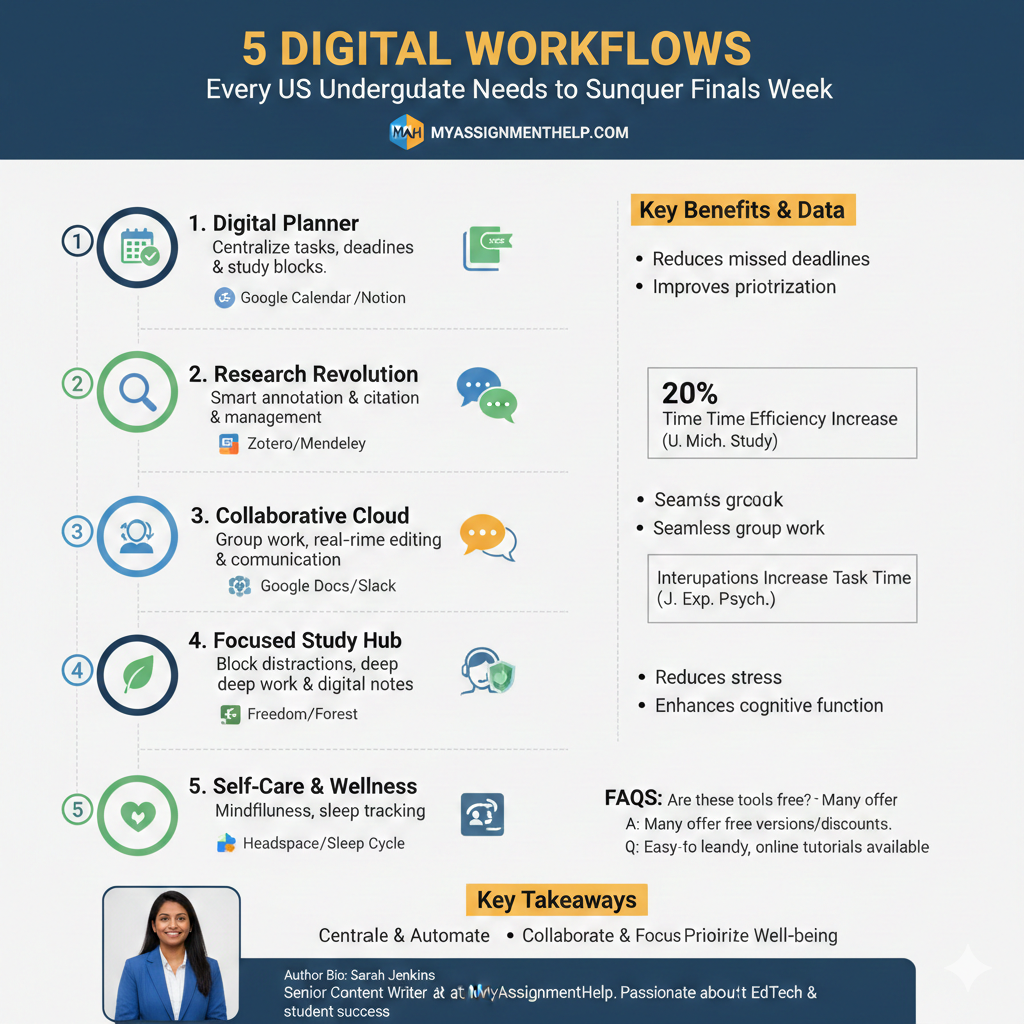
Key Takeaways:
- Centralize Everything: Use a digital planner as your single source of truth for all academic and personal commitments.
- Automate Tedium: Leverage citation tools to save time and ensure accuracy in your research.
- Collaborate Smartly: Utilize cloud platforms for seamless group project execution.
- Eliminate Distractions: Create a focused digital environment with website blockers and concentration tools.
- Prioritize Wellness: Integrate self-care apps to manage stress and maintain physical health throughout the week.
Frequently Asked Questions (FAQ):
Q: Are these tools expensive?
A: Many of the essential tools mentioned have free versions or student discounts, making them highly accessible for undergraduates.
Q: I’m not very tech-savvy. Are these workflows easy to learn?
A: Most modern digital tools are designed with user-friendliness in mind. Start with one or two tools and gradually integrate more as you become comfortable. Online tutorials and university IT support can also be great resources.
Q: How do I choose the best tool for me?
A: Consider your specific needs and existing habits. For example, if you’re already a Google user, Google Calendar and Google Docs might be a natural fit. Experiment with free trials to find what works best for your workflow.
Q: Can I really avoid cramming with these workflows?
A: While these workflows significantly enhance efficiency, they are most effective when adopted proactively throughout the semester, not just during finals week. Consistency is key!
Q: What if my university uses specific platforms?
A: Many universities provide access to collaborative platforms like Microsoft 365 or specific learning management systems (LMS) like Canvas or Blackboard. Familiarize yourself with these as they often integrate well with the digital workflows discussed.
Author Bio:
Sarah Jenkins is a Senior Content Writer at MyAssignmentHelp, passionate about EdTech and student success. With a background in academic research and a deep understanding of the challenges undergraduates face, she dedicates her work to providing practical, data-driven strategies that empower students to excel. Sarah believes in harnessing the power of digital tools to transform the academic experience from stressful to successful.
